
Embracing Transformations – Together with Young People, Keeping Pace with the Times

Solingen, July 28, 2022 – For the thirteenth consecutive time, REO AG has honored high school graduates from Gymnasium Schwertstraße in Solingen with the Physikus Award for outstanding achievements in physics. The young award winners thus continue a nearly 100-year tradition in which REO AG introduces talented young people to the fascinating world of electrical engineering. For almost 100 years, REO AG has accompanied talented young people on their path into professional life and inspired them for the world of technology. The training of skilled workers has been and continues to be one of REO’s most important investments in the future. Over time, both the content and the offerings have adapted to technological progress. New professional fields have emerged, new concepts of knowledge transfer have been introduced, and REO has been further developed by young employees from generation to generation. Today, REO offers various internships and apprenticeships at its locations, as well as entry opportunities for student employees and holiday workers. Partnerships with universities and schools demonstrate that REO, as a global innovation driver, is aware of its responsibility towards the high achievers of tomorrow. Young talents are specifically fostered and supported. Especially against the backdrop of an increasingly complex world with unforeseen challenges, such appreciative recognition of achievements provides young people with stability and encourages them to continue on their own path – towards a positive future for themselves and our society. For 13 years now, a fixed component of this support has been the honoring of outstanding achievements by high school graduates of Solingen’s Gymnasium Schwertstraße in the field of physics with the Physikus Award. For REO, the awarding of the Physikus Award is a matter close to its heart, inspiring high school graduates for the fascinating world of physics year after year. This year, the following were honored: Lisa Metzner (Bronze) Priya Hundal (Bronze) Abdulrahman Rsho (Silver) Jessica Gartman (Gold)
New Variable DC Power Supply Supports Electrical Testing Technology
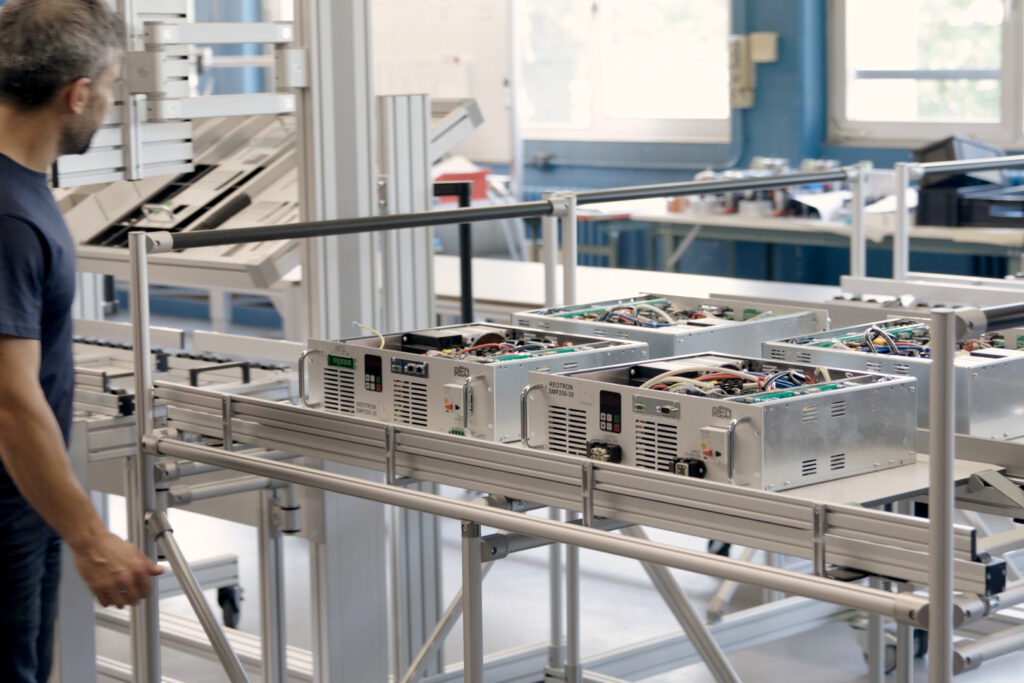
Manufacturers’ interest in solar energy continues to grow. As solar panel manufacturers strive to meet this demand, the global semiconductor shortage has led to a lack of availability and longer lead times for key products used in the manufacture of solar panels and other thin-film processes. To help manufacturers address these issues, electrical product manufacturer REO UK has launched the REOTRON SMP250-30, a variable DC power supply capable of delivering up to 250 volts (V) at 30 amperes (A), suitable for all sizes. The new REOTRON SMP250-30 variable DC power supply has been developed as a more flexible solution that allows current and voltage to be set at the factory for a wider range of applications compared to other devices in the REOTRON range. The device comes standard with a DeviceNet or EtherNet IP interface, making it easy to integrate into a manufacturer’s process management systems. The REOTRON SMP250-30 provides the variable DC power supply essential for the manufacture of solar cells and other products and applications requiring thin-film deposition. The device delivers a constant voltage or current for the process, ensuring that the coating is the correct thickness, measured in nanometers (nm), and with low variability to ensure that each solar cell meets the appropriate standards. “The electrical components industry has suffered many setbacks due to COVID, the closure of production facilities and natural disasters”, says Steve Hughes, Managing Director of REO UK. “Many of these challenges have negatively impacted component availability and increased lead times, leading to price increases for manufacturers.” “Instead of building multiple variable DC power supplies with different specifications, REO AG has instead focused on a one-size-fits-all approach”, explains Hughes. “This means that REO can deliver the variable DC power supply quickly and at a lower cost to its customers.” In addition, REO configures the REOTRON SMP250-30 devices via software to deliver any voltage between 10 and 250 V and between 1 and 30 A. The REOTRON SMP series includes primarily switched-mode power supplies with DC output. Electronics developers can use this product line for renewable energy applications, electric vehicle testing, battery emulation, and general process and testing applications. Development engineers interested in the latest REOTRON SMP series products can visit the REO website for more information.
With REO, Safely and Comfortably into the Future of Camping Holidays

The camping boom has arrived in Germany. After slight declines during the Corona pandemic in 2021, bookings at campsites are massively increasing in summer 2022. The managing director of the Federal Association of the Camping Industry in Germany (BVCD), Christian Günther, sees the “ camping trend (…) continuing unabated. The record overnight stays in August, combined with the high number of new registrations of recreational vehicles, clearly show that camping remains an attractive form of nature-based and safe holiday .“ (Source) Without many campers knowing it, REO technology also travels with them on holiday – in the form of transformers, standard transformers, or toroidal core transformers, which are installed in heating systems. First and foremost, these systems are usually underfloor heating. REO components are popular with manufacturers all over the world because high manufacturing quality and high-quality materials enable trouble-free operation for many years – even in winter. Because winter, in particular, poses special challenges for many systems. To prevent damage in motorhomes or caravans due to frost or moisture, heating systems can be operated autonomously throughout the winter at a low setting, for example, with REO technology. If a component fails, individual REO transformers can be replaced. This is not the case with conventional designs using cast heating coils. Technological progress is therefore also advancing rapidly in the camping sector. New manufacturing techniques and models offer exciting areas for innovative electrical engineering, especially against the background of energy-efficient production and low-emission operation. REO therefore offers manufacturers a wide range of individual and standardized components, with compact dimensions and low weight. These are essential properties for future-oriented series production with high efficiency, extensive lightweight construction, and an awareness of sustainability in caravanning. But even here, REO is already looking further into the future and already offers suitable components for e-mobility and hydrogen drives.
REO Braking Resistors for a Wide Range of Requirements
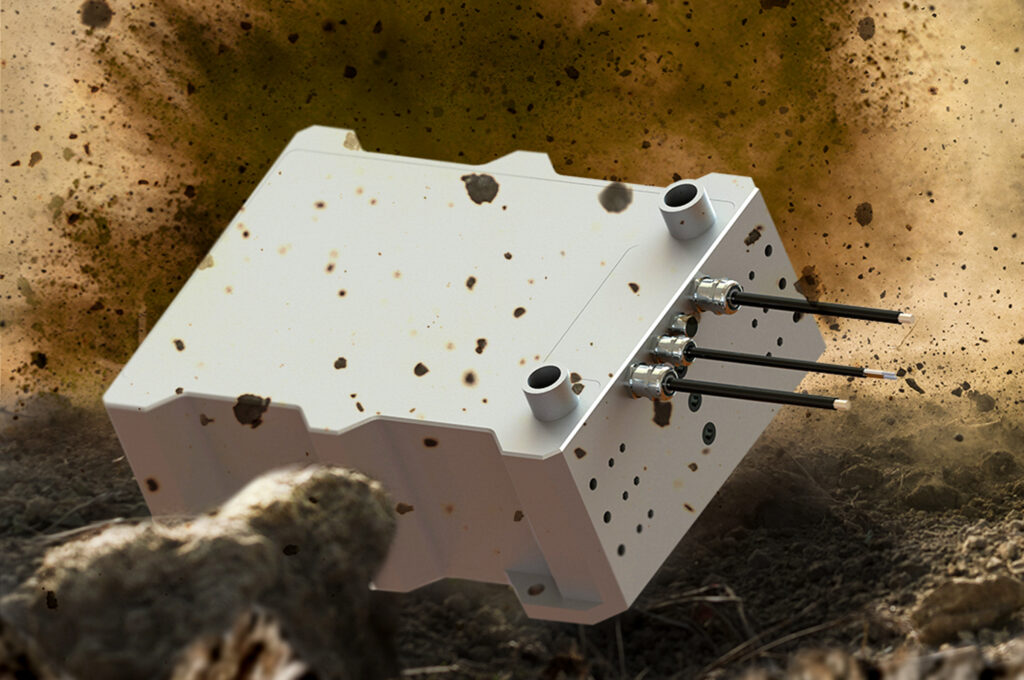
The requirement profiles for REO braking resistors are as diverse as our customers themselves. Our braking resistors often have to be used in the immediate vicinity of other, sometimes temperature-sensitive components or generally installed in confined and poorly ventilated areas. For these cases, REO offers series that, through the filling of heat transfer media, offer better heat dissipation and better pulse loading compared to air-cooled products. In addition to optimal temperature management, operational safety is a high priority for compact installation. Therefore, our braking resistors are short-circuit proof, self-extinguishing and overload-proof under short-term loads. The combination of REO’s typical properties enables use in a variety of industries, from wind power technology to railway technology and automotive technology
REOhm BW 15x Series – Designed for the Toughest Applications

In industry, Resistors must operate reliably for many years under harsh environmental conditions. In addition to the permissible temperature range, chemical exposure represents a limitation on use. This includes resistance to pollutants such as vapors, gases, coal dust, oil, or brake abrasion. Furthermore, to ensure reliable function, the ingress of moisture and the smallest foreign bodies must be prevented, and physical effects such as vibrations or oscillations must not have a negative influence. The REOhm resistors of the BW 15X series have been specifically designed for these environmental conditions. Their special design ensures maximum protection against mechanical, chemical, or biological influences, enabling high operational reliability and a long service life with simultaneously low-noise operation.
Future Vibratory Feeder Technology with the MFS 368
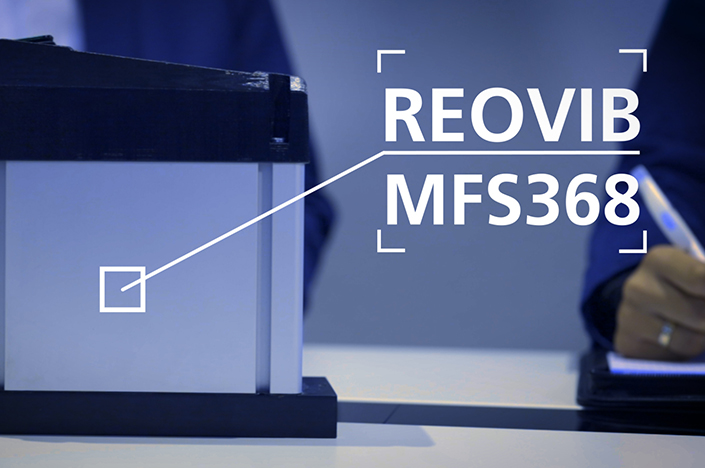
Vibratory feeder technology is an ideal conveying system for transporting goods of various sizes, from the smallest metal pieces to heavy crankshafts. However, in order for the conveying and a controlled flow of the conveyed parts to be possible, each vibratory feeder requires a control unit. Under the REOVIB brand, REO offers various series of control units for diverse requirements. These include, for example, simple controls that provide a variable voltage for the magnet using triacs or thyristors in phase control mode, or frequency converters that generate any desired drive frequency and amplitude for the vibratory feeders. The device versions range from PCB designs for integration into custom housings or control cabinets, continue with control cabinet installation units for mounting rails or mounting plates, and conclude with self-contained housing versions in protection classes from IP54 to IP65. The networking of individual devices into complete feeding systems is possible via the control inputs and outputs. This allows for the realization of more complex setups and conveying requirements. Connection to higher-level control systems can be implemented using analog signals or fieldbus couplings such as Profibus, CAN-Bus, EtherCAT, or EtherNet/IP and ProfiNet. Optionally, many versions are also available with UL/CSA certification. But REO is already thinking ahead: With the ongoing changes in industry, the demands on production and communication are increasing in terms of scalability and interoperability. Through REO’s intensive research and development, we can already offer control units like the MFS 368 today, which enable broad integration into this modern requirement profile of fully networked Industry 4.0. Digital technology and rethought processes enable a quality of production and system monitoring that would be unthinkable with conventional technologies. For this purpose, REO equips its devices with IIoT-Ready features and introduces its own developed hardware and software solutions. On the hardware side, this means that devices can be accessed via the REONET DL (Devices-Link) interface over a conventional network infrastructure. By using OPC-UA, REONET DL simultaneously enables participation in the world’s largest ecosystem based on common standards. On the software side, REO offers the REONET CT (Configuration-Tool) software, which simplifies the configuration of devices. Using an intuitive web interface, configurations for devices can be created, distributed, saved, restored, and adjusted. The automated process ensures that no parameters are omitted and that the devices function as intended.
REO Braking Resistors – Always a Cool Solution

Resistors are designed to convert electrical energy into heat, which is why heating of the exhaust air and adjacent housing parts is unavoidable. Temperature management is therefore of particular importance for braking resistors. In many cases, these products are used in very confined spaces. In such cases, products of different designs or multiple braking resistors inevitably influence each other. A first step is therefore to check the heat-conducting properties of the surface on which the braking resistor is mounted. Poor heat conduction leads to a higher operating temperature of the resistor. Direct mounting on a heat sink or a cooling surface can provide a remedy, significantly increasing the continuous power of the resistor or reducing its surface temperature. Depending on the type and size of the cooling surface or heat sink, the power can be increased by a factor of 1.5 to 4. For maximum safety, it is possible to monitor the resistor’s temperature with a temperature switch. If a nominal temperature is exceeded, the temperature switch opens and triggers an alarm contact. The temperature switch is equipped with two ready-to-connect wires. If installation conditions are not optimal due to compact structures or protective devices against environmental influences, preventing adequate air supply and exhaust or sufficient heat dissipation via cooling surfaces, REO liquid-cooled systems can be used.
Long Night of Economy
On May 13, 2022, from 1:00 PM to 9:00 PM, we at REO will open our doors in Henningsdorf for the second LONG NIGHT OF ECONOMY, offering you the opportunity to gain insights into our diverse production. Get to know our production processes and our team during open tours. We will visit individual production areas such as warehouse management, welding shop, winding shop, assembly, and quality assurance. We would also be happy to provide you with information about our current job openings for student internships, working students, apprenticeships, and permanent positions. We look forward to your visit at Eduard-Maurer-Straße 13 / on our company premises. Registration is not required.
KEEP CLEAN ENERGY CLEAN

Clean energy, generated from renewable sources, is undoubtedly and justifiably on the rise. In the last two decades, renewable energies have evolved from a “nice-to-have” energy source, only considered marginally and operated uneconomically for long periods, to a necessity, now even enshrined in national commitments around the world. While wind energy (onshore and offshore) still dominates with a 20 percent share of total electricity generation in 2021, photovoltaics (8.8%), biomass (7.5%), and hydropower (3.4%) will also be expanded more in the future. However, even with this type of electricity production, attention must be paid to efficient use and electrically efficient power conversion, so that losses are kept to a minimum. Even if the sources are virtually inexhaustible, the space and technology used to exploit these sources are limited. REO components such as braking resistors and power filters help to ensure that clean energy really is clean. This is because, with the increasing complexity of renewable technologies, the power conversion process can become a source of problems for power quality. According to a British study, in variable-speed wind turbines that use doubly-fed induction generators (DFIGs), 30 percent of the total rated power is accounted for by the power electronic converter that supplies the rotor winding. The DFIG winding is usually directly connected to the grid, which can lead to impairments of sensitive electronics. The impairment manifests itself in a shortened service life of the components or even unplanned downtimes. Another problem that negatively affects power quality is a possible energy surplus in the system. This can be the case, for example, when a wind turbine is too slow to adjust the pitch angles of the nacelle and rotor blades when wind speed changes, or the mechanical braking system has to bring the rotor blades to a standstill. This overvoltage can overload the electronics and cause permanent damage. How can power quality problems be eliminated? REO offers suitable product series for these requirements: The components include EMC Filters for suppressing high-current interference, braking resistors for dissipating excess energy in the form of heat, and other components such as mains chokes and output chokes. You can find all products for this in our comprehensive brochure.
The Dream of a 3D-printed House – Already a Reality Today Thanks to REO
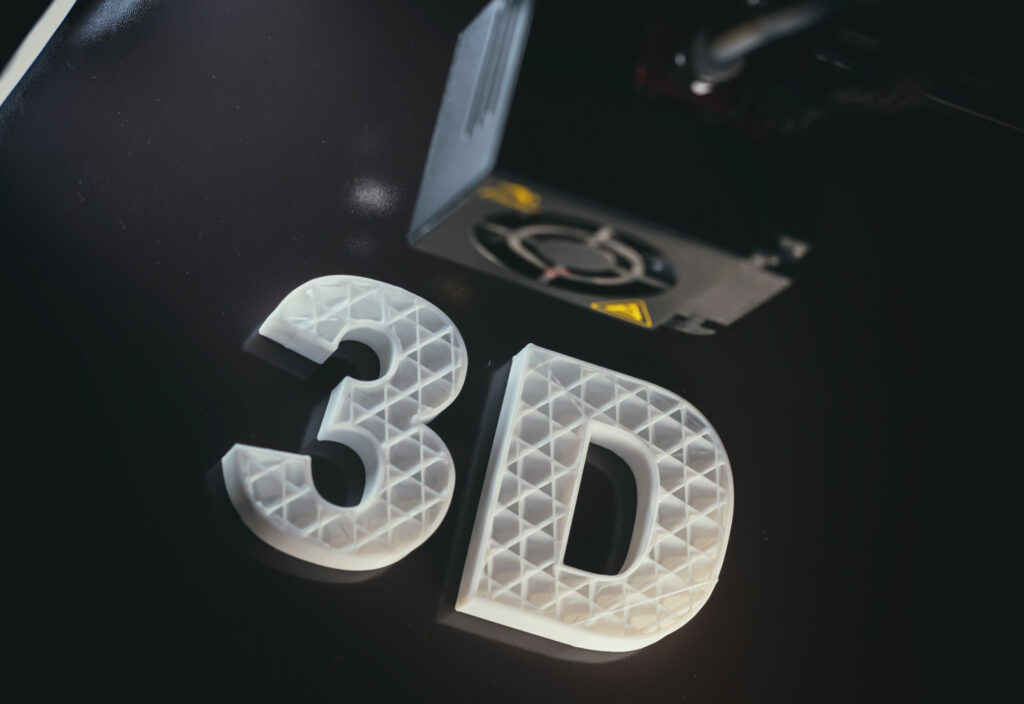
The world’s largest settlement of 3D-printed houses is currently being built in Austin, Texas (USA). Thanks to innovative robotics with REO components, intelligent software and advanced materials, a total of 100 houses will be completed by the end of 2022. The 3D printers use REO braking resistors from the BW 156 series. These compact braking resistors are ideally suited for the drives used and, thanks to their very good thermal performance, can also be used permanently in harsh environments. REO is thus making a significant contribution to one of the greatest technological innovations of recent decades in the construction sector. This is because 3D printing of houses is significantly superior to both solid and prefabricated construction in many areas. The houses, with a maximum size of 3,000 square meters, are printed quickly, precisely and inexpensively, mainly by a single robot. Labor and material shortages as well as shoddy construction are thus a thing of the past and the global housing crisis is being counteracted. For many families, the dream of owning their own home becomes affordable and the environment benefits: the houses are energy-efficient and there is hardly any waste and no dirt or pollutants caused by construction machinery. 3D printing also enables a material structure that is more resistant and durable than conventional building materials. This minimizes potential damage from natural disasters. We look forward to further 3D projects and are excited to see where the journey takes us. Perhaps to the moon or Mars?