
Ensuring Quality
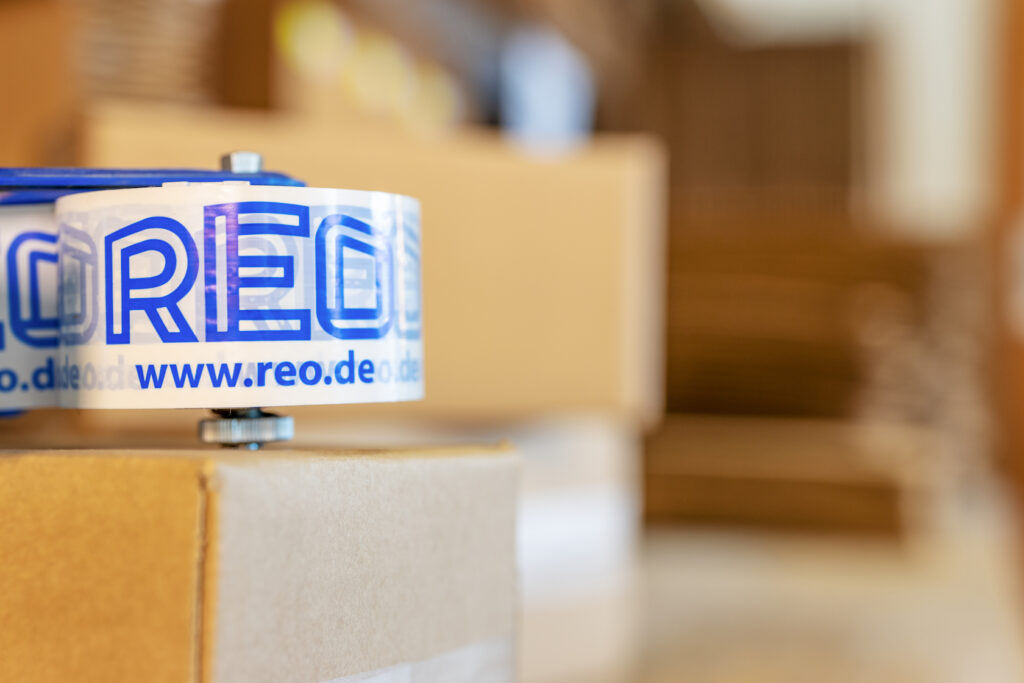
In an era where securing supply chains is increasingly challenging, comprehensive and thorough quality assurance is more essential than ever. Even with long-standing and proven suppliers, recipe changes occasionally occur due to raw material supply bottlenecks or sharply fluctuating prices on the global market. While this ensures security of supply, the use of alternative substances as raw materials can impact product quality. Therefore, REO invests considerable time in the incoming goods process, inspecting all delivered parts with standardized quality management and comparing them with reference samples. If a batch shows deviations, the materials are not used. REO products only leave our facility with absolute certainty of quality and performance. This ensures consistent quality across all products, components, and complete solutions, upholding what has always distinguished REO: high quality and robust, low-maintenance products. With a clear conscience, we can anticipate long lifespans, sometimes exceeding 25 years, thanks to these tests and controls. The life cycle costs, which are an increasingly important decision factor for many of our customers, are comparatively low due to the high quality of the components used and the associated reduced maintenance intervals. Consequently, REO customers benefit from an efficient product with low service costs throughout its entire lifespan.
EMC Filter – Reduction of Interference
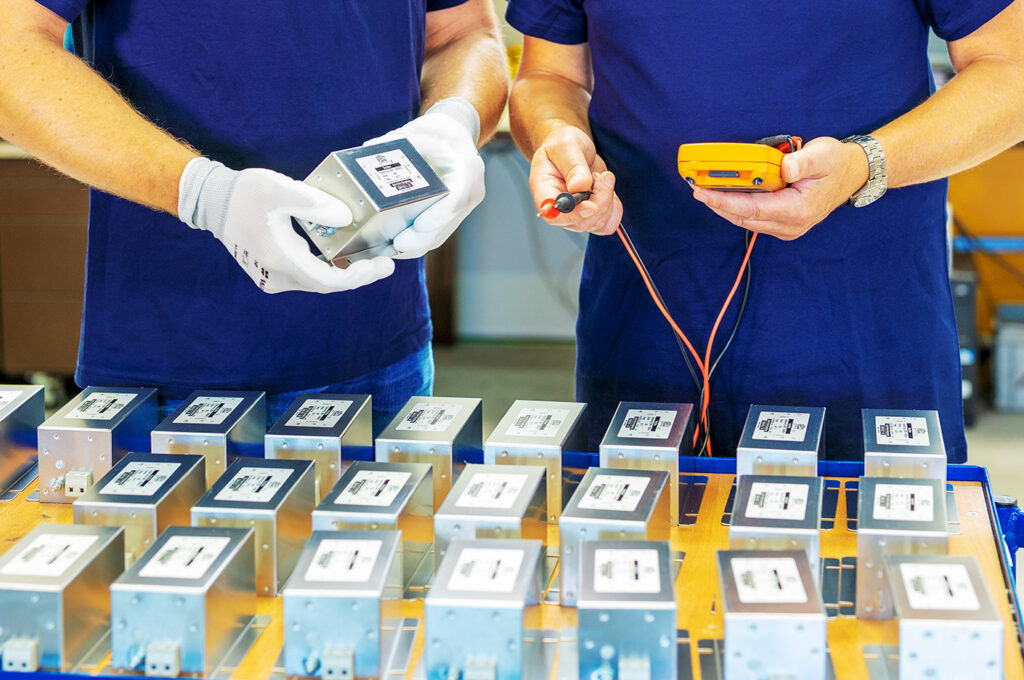
The use of electrical and electronic devices is constantly increasing in our world, and there is no end to this growth in sight. However, for these devices to operate without interference, “electromagnetically compatible” conditions must be present. This means that a device itself must work satisfactorily in that it does not cause electromagnetic interference in the environment that would be unacceptable to other devices. Electromagnetic interference can cause various faults that are often not easy to diagnose. These disturbances range from crackling and noise in a radio receiver, to data errors and processor failures in computer technology, and even insulation breakdowns. In addition, they can propagate in different ways depending on the frequency. To suppress conducted interference and to ensure EMC guidelines, mains filters with appropriate values are required. By maximizing impedance mismatch, the use of EMC filters prevents the propagation of interference. The filtering effect extends in both directions. This means that interference from the consumer to the mains is attenuated as well as from the mains to the consumer. Important to know: Low-frequency interference below 10 MHz propagates mainly via conducted paths through galvanic couplings. Higher-frequency interference > 30 MHz, on the other hand, is mostly transmitted via radiation. The range in between is an addition of the transmission mechanisms.
The Basic Principle of the REO Braking Resistor
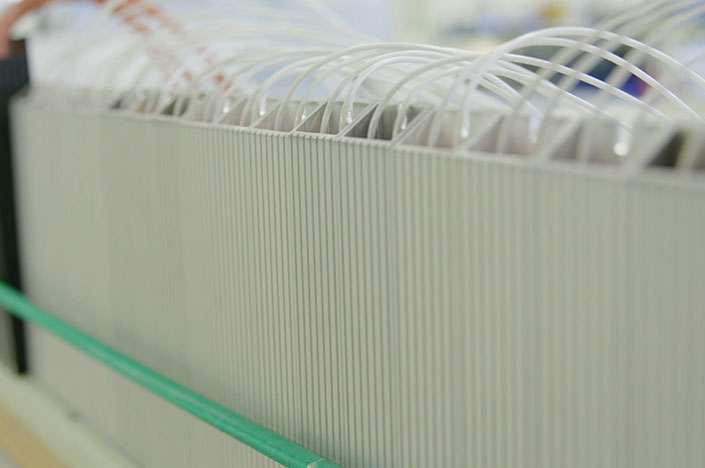
The REOhm braking resistor can absorb and store energy for a short time thanks to a special winding method. The energy leads to a thermal change, a heating of the braking resistor. Thanks to a corresponding filling and compression, the thermal energy can be quickly transported to the surface during the pauses and released to the environment through contact with the cooling air. A heat sink increases the contact surface with the air through grooves and rods and accelerates the removal of heat. An even better cooling conduction is achieved by special heat-conducting liquids in series with REO liquid cooling. Due to the rapid cooling of the winding body, whether by air or liquid, impulses in various intensities or durations can be continuously absorbed and do not lead to the destruction of the component. The REOhm braking resistors of the standard series are designed for a duty cycle of 5% -100% – smaller duty cycles are also possible on request.
Engineering “Made in Germany”
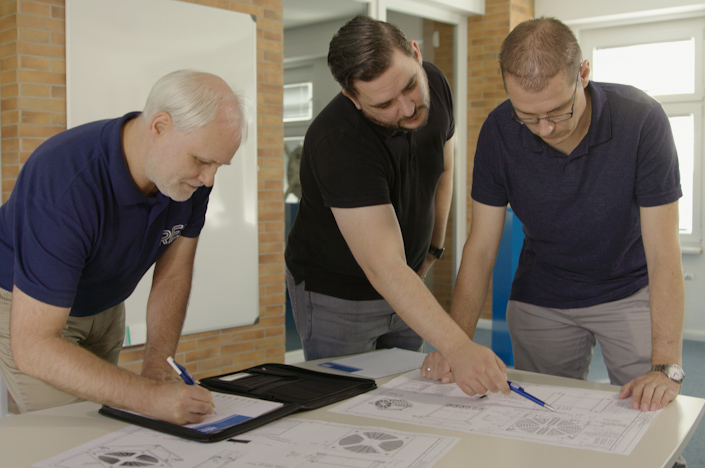
REO products have always stood for a long service life and properties perfectly adapted to individual requirements. To ensure that our products can be used successfully, we attach great importance to holistic planning and conceptual design and use modern simulation techniques. This means that all relevant requirements are taken into account based on customer-specific requirements and REO’s almost 100 years of experience in component and product construction. Even if requirements should change in the course of a project, we will work together to find a suitable solution. The REO technicians and engineers consequently accompany the entire development process. The goal is always in focus: To create an optimal product that functions safely and reliably over a long service life, conserving resources and with low wear. This applies both to individual components and to our complete solutions. Are you interested in a standard product or a customized solution for inductive, resistive or electronic components or complete solutions? We look forward to hearing from you
International Women’s Day
Today, we want to highlight International Women’s Day! As a developer and producer of inductive, resistive, and electronic components and complete solutions, REO is traditionally seen as a company with a predominantly male workforce. Therefore, we are delighted to use a day like this to proudly emphasize our many female employees. From board members to site managers to specialist packers; from heads of development to buyers to apprentices: Important and key positions at REO are, of course, filled completely regardless of gender. REO actively champions diversity and inclusion in the workplace, focusing primarily on the skills and qualities our employees bring, which make REO what it is: a family business.
Fundraising Campaign for Solingen, Kyritz, and Pfarrkirchen – REO AG Donates to Local Projects

REO AG is donating a total of 15,000 euros, distributed among the cities of Solingen, Pfarrkirchen, and Kyritz, as part of a major aid campaign on behalf of all employees. REO consciously aims to support people in need and their families locally. The donation was made possible by foregoing the obligatory gift campaigns for customers at Christmas last year. In addition, employees waived gifts to further increase the donation amount. The donation amount was received by social, non-profit organizations in the local vicinity of REO’s locations in Solingen, Pfarrkirchen, and Kyritz. REO is supporting five long-term projects here, which were proposed and ultimately selected by REO employees. “The broad support for the donation project among our employees shows that at REO, we live social responsibility even outside our company,” says Jasminka Usein, Board Member of REO AG, adding: “By foregoing the annual Christmas gift campaign, we can enable essential, truly important things for other people. With the selected projects, we also know that every euro goes exactly where it is needed. . In Solingen, REO supports the local Tafel (food bank). Around 60 volunteers work daily to collect, sort, and distribute food that would otherwise be wasted. In addition, the Tafel’s Medimobil provides medical care to people who have no access to medical services. Besides the Tafel, the Palliative Hospice Solingen receives a portion of the donation. REO thus supports the valuable work of the new inpatient hospice in Solingen. 28 employees and numerous volunteers accompany seriously ill and dying people whose healing options have been exhausted, as well as their relatives. In Kyritz, REO supports the volunteer fire department. Following the motto “rescue, extinguish, recover, and protect”, the fire department is an important partner for the citizens of Kyritz in preventing and averting dangers to the environment and people. Furthermore, the youth fire department also benefits from the donation with its important and supportive youth work. Young people are also actively supported by REO in the second project selected in Kyritz. With the donation to the Förderverein der Goethe Grundschule (Friends of Goethe Primary School Association), the daily educational work of the Goethe Primary School Kyritz is improved. Among other things, educational excursions, swimming lessons, and support measures in the school are made possible. With the donation to Kinderkrebshilfe Rottal-Inn (Children’s Cancer Aid Rottal-Inn), REO makes an important contribution to enabling free help for affected families. With numerous aid offers, financial assistance, and personal support, the association helps families and children cope better with the extreme situation—a cancer diagnosis—and ensures they are not left alone in the bureaucratic and exhausting daily routine. Beyond the current donation campaign, REO AG has been taking on social responsibility for many years, fully in line with Corporate Social Responsibility. Recently, outstanding students were awarded the Physikus Prize, and students were supported through the Deutschlandstipendium (Germany Scholarship). More information can be found in the REO AG Newsroom at image.reo.de
New Adjustable and Constant High Current Power Supply REOLAB 220
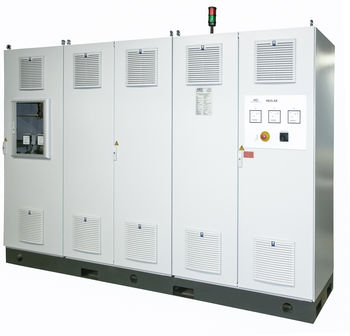
The testing technology division of REO has developed the REOLAB 220, a three-phase AC high current power supply for testing laboratories. The devices can supply voltages of up to 10 V and currents of up to 10kA (10,000 amps), depending on customer requirements. REO supplies the REOLAB 220 devices to testing and quality assurance laboratories around the world. The REOLAB 220 offers several advantages for testing power supplies for high currents and low voltages. The device can quickly regulate voltage fluctuations, and the current setpoints can be adjusted either manually or automatically. This is done with a clean, sinusoidal output current over the entire adjustment range. High current AC is often used to test fuses, cables, terminals, and other connections where testing with rated current and voltage is difficult or unnecessary. By reducing the voltage, the current can be increased at a certain power, which allows greater flexibility in performing the tests. Safety is ensured because the test voltage is usually below 50 V and is isolated from the mains by the use of a step-down isolation transformer. The testing of fuses often requires that they be operated at a specific current with a deviation within acceptable limits. However, with a fixed power supply, fluctuations can occur due to temperature, load regulation, and input voltage. If the current is not automatically adjusted to compensate for these fluctuations, it may mean that lengthy burn-in or soak tests have to be repeated. The REOLAB 220 can help test labs avoid this. REO products can be set to a setpoint or desired power via a potentiometer or even a fieldbus and regulate around this value regardless of changing load or input conditions. REO offers both the basic system and a complete, turnkey package for integration into a quality assurance system. The offer is not limited to high current AC. High voltages up to 8 kV with a maximum power of 1 MV or 800 kW can also be supplied for DC systems.
REO Introduces N CNW 905 and N CNW 903
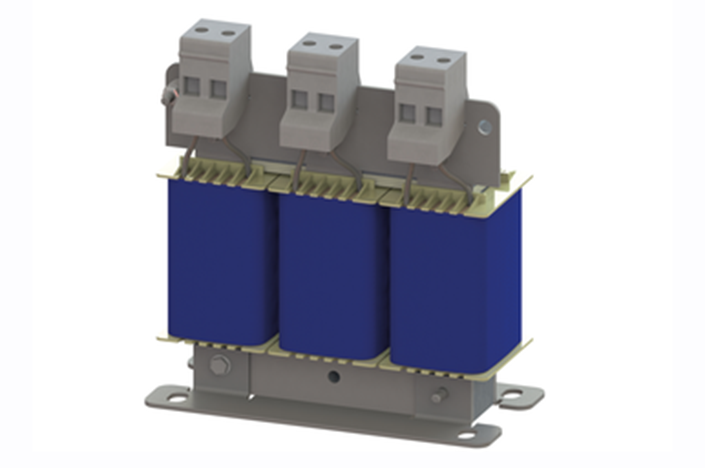
REO has launched two new series of line chokes, the N CNW 905 and N CNW 903, for reliable suppression of harmonic currents. These series integrate seamlessly into REO’s already broad portfolio of line chokes, providing a valuable addition. The new line chokes have been designed to require fewer components, thus reducing copper usage, achieving smaller dimensions, and simultaneously lowering power loss by up to 25%. This reduced material usage in the N CNW 905 and N CNW 903 is made possible by innovative edge-winding technology. With increased effectiveness and lower weight, the new series with edgewound coils feature highly efficient cooling due to their single-layer design—especially with forced cooling. Thanks to improved cooling, aluminum conductors can be used as a substitute for copper conductors, depending on the design. The reduced weight and smaller dimensions are possible due to the reduction of skin and proximity losses. Edge winding is particularly suitable for semiconductors based on new materials such as silicon carbide (SiC) and gallium nitride (GaN). Due to the lower winding capacitance, the edgewound coil can also be used at higher frequencies. Almost no insulating material is needed, which increases the lifespan. Less material, and especially less copper, also translates into a lower overall product price. In combination with automated manufacturing, production costs can be further reduced. This significantly shortens the payback period. REO is convinced that this technology offers a long-term advantage over conventional methods, which is why manufacturing capacities are being further increased. REO can equip the devices with an ingress protection (IP) rating of up to IP66, guaranteeing dust-tightness and protection against water jets. This means that REO chokes can also be mounted outside a main control cabinet. “The use of line chokes has long been a reliable method for reducing the harmonic currents that a typical variable speed drive draws,” explains Steve Hughes, Managing Director of REO UK, adding: “Improving the power factor (PF) and reducing harmonic currents in the VFD’s mains supply are key to increasing efficiency. For example, a typical 22 kW drive has a PF between 0.7 and 0.8 and an RMS input current of about 43 amps when the motor is loaded. We have found that by using an REO input choke to reduce harmonics, this PF can be improved to about 0.89 and the RMS supply current can be reduced to about 35 A, which can lower the electrical energy required to drive the motor by over 18 percent. .
Why a Constant Power Supply Contributes to Life-Saving Treatment
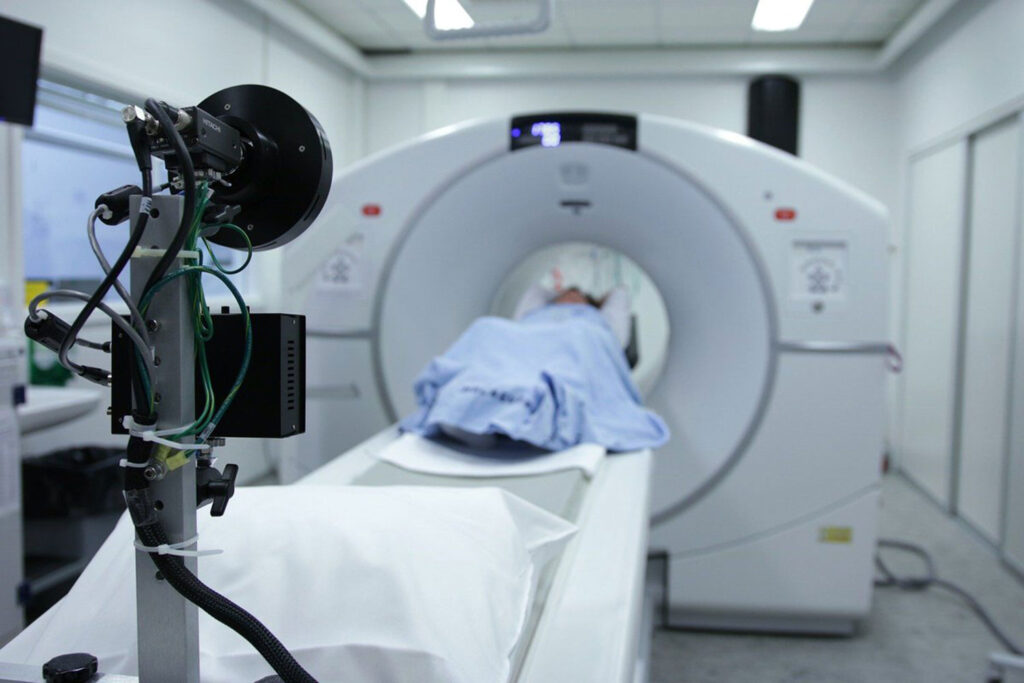
In Germany alone, hospitals treat over 50,000 patients every day. Given the ever-increasing need for fast and reliable healthcare, hospitals are demanding modern network solutions. Information technology and its supporting infrastructure are becoming critical components in the industry. To review test results or prescribe medication, medical professionals need real-time access to all relevant patient data. Furthermore, medical devices such as computed tomography (CT) or magnetic resonance imaging (MRI) scanners must be able to deliver data-intensive scans directly to the specialist departments. Unlike many other power grids, there is therefore no room for downtime in hospitals. Any power interruption can immediately become a danger to the lives of patients. It is certainly no surprise these days that a hospital cannot function without electricity. However, the electricity itself can also become a problem. Fluctuations in the power grid can lead to faulty entries or data loss when collecting and storing health data. This effect is amplified when the number of electronic devices in the local power grid increases. The electrical environment becomes “louder” and more “distorted”. In practice, these problems are evident in X-ray machines, which are usually susceptible to voltage spikes and harmonic distortions. As a rule, this leads to a shortened service life of the components, as well as data loss during operation. Changes in the power grid also pose a risk to the physical safety of patients and medical staff themselves. The risk of fires and electric shocks increases if live parts of the housing come into direct or indirect contact with people. Similarly, critical systems such as life-support machines in intensive care units require a constant power supply so that they can perform their task effectively and without fatal consequences. All these risks can be reduced by using isolators, which protect the devices from the effects of voltage spikes. This is achieved by interrupting the electrically conductive connections between the network periphery and the device. REO offers the REOMED series specifically for these purposes. REO network isolators also enable virtually loss-free transmission of high-frequency AC signals, in accordance with the medical requirements of IEC 60601-1. This standard stipulates that devices and systems that are connected by means of signal interfaces must have electrical isolation devices in the power and data lines. REO components are currently found in many intensive care applications around the world. With experience and broad knowledge in component construction, REO contributes to ensuring that around 50,000 patients can be treated safely, well and quickly every day.
PLAN THE TRANSITION TO E-CARS NOW
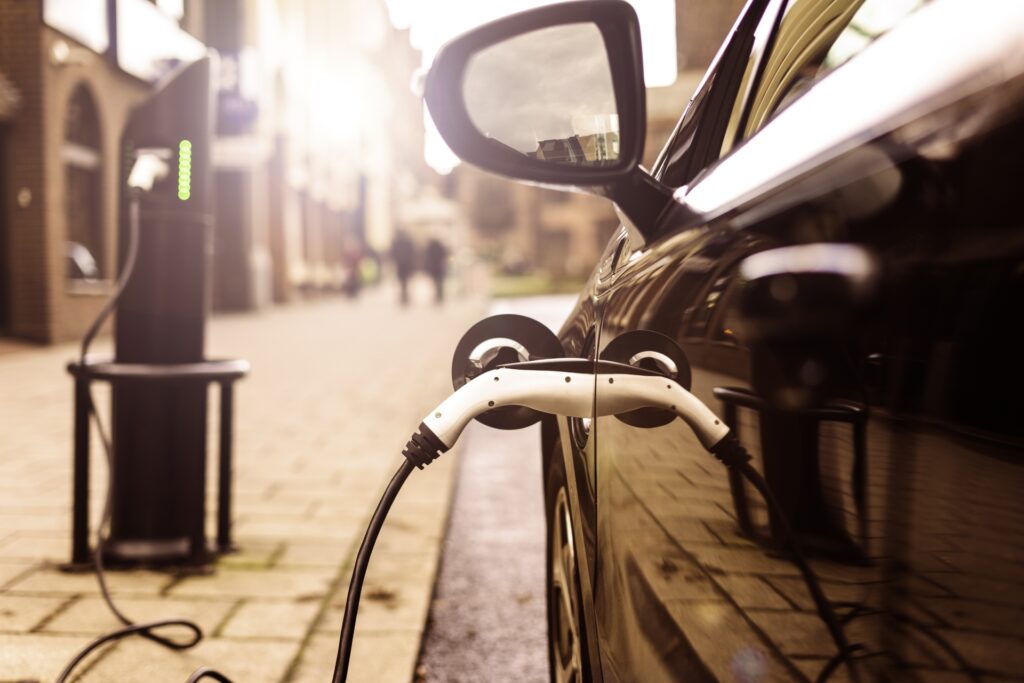
For many customers, electric vehicles are already the better choice compared to diesel or gasoline-powered vehicles. Automobile manufacturers are already adapting to changing demands and building new production facilities solely for the production of all-electric vehicles. In view of the impending and partly already decided bans on internal combustion vehicles by the end of this decade, this is a logical consequence. Electric vehicles are expected to dominate the market from the 2030s onwards. The registration figures also show that a rethinking has taken place among the population: While new vehicle registrations decreased by 19% in 2020 compared to the previous year, electric cars recorded an increase of 207 percent, which means a market share of 6.7 percent. This trend continued in 2021, so that the market share is now almost 14%. Estimates assume that by 2030, up to 14.8 million battery-electric vehicles and plug-in hybrids will be on our roads. However, a change in the type of drive also entails a structural change in the transport and energy sectors. This is currently leading to problems that urgently need to be solved in the coming years. The primary concern is the ratio of electric cars to charging points and the associated worry of finding a free charging spot. Drivers fear running out of power, especially on long journeys. They have range anxiety. This concern is unfounded, as real behavior shows: Most drivers take regular breaks on longer journeys, as recommended by the ADAC. This means that more charging connections are needed, but not on the scale many assume. In addition, increasingly shorter charging times lead to a stronger throughput of vehicles per hour. Regardless of the good intentions of electrically powered vehicles, the problems with electricity production should not be overlooked. Is it “green” or does the electricity come from fossil fuels? And how is the electricity transported so that high-power charging is possible everywhere? The concern is also often expressed that the use of e-vehicles will put even more strain on the power grid, which would lead to disruptions and interruptions. According to VW, however, the German grid is capable of easily meeting the additional demand. Thanks to renewable energies and the targeted planning of the switch to e-cars, it is well equipped for this. However, despite this capacity of the power grid to cover the increased demand, challenges still exist in terms of electricity. These arise from charging e-vehicles in the high-frequency range. Specifically, it concerns harmonic currents. These arise as a result of frequency changes in the power distribution systems, which lead to voltage and current fluctuations. Such irregularities can occur when charging electric vehicles and cause problems in the grid as well as in the vehicles themselves. These harmonic distortions increase the RMS value of the voltage and the peak value of the waveform. This, in turn, increases the demand for current from the grid. The increasing current flow in the system leads to higher losses and may also accelerate the damage to components in the grid. Due to the current supply from the harmonics, the components can overheat due to heat losses and be permanently damaged. This can cause failures of the damaged components. The consequence would then be a power outage. Harmonic distortions can also directly affect the vehicle’s performance and damage the on-board electronics. This aspect should not be underestimated. After all, many potential e-car buyers are deterred by the concern that the vehicle may not be as robust as an internal combustion engine and generally more prone to defects. Such defects would promote general distrust of e-vehicles and negatively impact acceptance. If we become aware of the problems caused by harmonic distortions, we can already deal with possible solutions – and not just when the problems are already there. Fortunately, there is a simple solution to problems with harmonic currents: Harmonic filters help protect capacitors. These are an essential component in typical e-cars that can fail due to repeated exposure to harmonic distortions. Thanks to their low inductance tolerance and linear behavior, REO harmonic filters are particularly well suited to protect capacitors, even with current above the nominal value. If we prepare now for the practical aspects of using e-cars, we can ensure that the transition goes smoothly. For the obvious problems that electric drives could cause in power grids and the vehicles themselves, there are practical solutions. We can easily take advantage of the benefits of switching to e-cars, especially the lower CO2 emissions – provided we start planning now.